Friday, April 14, 2023
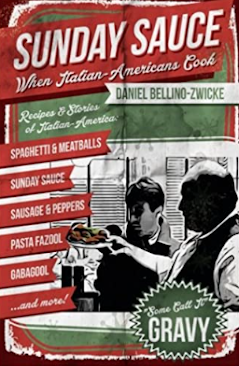
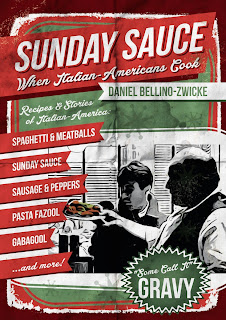
Sunday Sauce and Meatballs Recipe
Wednesday, April 5, 2023
Bazzy Eats at Roccos Italian Restaurant NYC
With NOEL & Brother DANNY
SUNDAY SAUCE & More ..
Monday, March 27, 2023
Italian New York History Italians
The first Italian to reside in New York was Pietro Cesare Alberti, a Venetian seaman who, in 1635, settled in the Dutch colony of New Amsterdam that would eventually become New York. A small wave of Protestants, known as Waldensians, who were of French and northern Italian heritage (specifically Piedmontese), occurred during the 17th century, with the majority coming between 1654 and 1663.[ A 1671 Dutch record indicates that, in 1656 alone, the Duchy of Savoy near Turin, Italy, had exiled 300 Waldensians due to their Protestant faith.
The largest wave of Italian immigration to the United States took place in the late 19th century and early 20th century. Between 1820 and 1978, 5.3 million Italians immigrated to the United States, including over two million between 1900 and 1910. Only Irish and Germans immigrated in larger numbers.
The first New York neighborhood to be settled by large numbers of Italian immigrants – primarily from Southern Italy (mostly from Sicily) – was East Harlem, which became the first part of the city to be known as "Little Italy". The area, which lies east of Lexington Avenue between 96th and 116th Streets and east of Madison Avenue between 116th and 125th Streets, featured people from different regions of Italy on each cross street, as immigrants from each area chose to live in close proximity to each other.
"Italian Harlem" approached its peak in the 1930s, with over 100,000 Italian-Americans living in its crowded, run-down apartment buildings. The 1930 census showed that 81 percent of the population of Italian Harlem consisted of first- or second- generation Italian Americans. This was somewhat less than the concentration of Italian Americans in the Lower East Side’s Little Italy with 88 percent; Italian Harlem’s total population, however, was three times that of Little Italy. Remnants of the neighborhood's Italian heritage are kept alive by the Giglio Society of East Harlem. Every year on the second weekend of August, the Feast of Our Lady of Mount Carmel is celebrated and the "Dancing of the Giglio" is performed for thousands of visitors.
After World War II, the original Italian settlements such as East Harlem declined as Italian Americans moved to the North Bronx, Queens and Brooklyn's southern tier. The geographic shift coincided with a new wave of Italian immigration. An estimated 129,000 to 150,000 Italian immigrants entered New York City between 1945 and 1973. Bypassing Manhattan, they settled in Italian American neighborhoods in the outer boroughs and helped reinvigorate Italian culture and community institutions. With the influx of postwar immigrants, Bensonhurst became the largest Italian community in New York City, with 150,000 Italian Americans in the 1980 census.
The best-known "Little Italy" in Manhattan is the area currently called that, which centers around Mulberry Street. This settlement, however, is rapidly becoming part of the adjacent Chinatown as the older Italian residents die and their children move elsewhere. As of the 2000 census, 692,739 New Yorkers reported Italian ancestry, making them the largest European ethnic group in the city. In 2011, the American Community Survey found there were 49,075 persons of Italian birth in New York.
NEW YORK
Monday, March 13, 2023
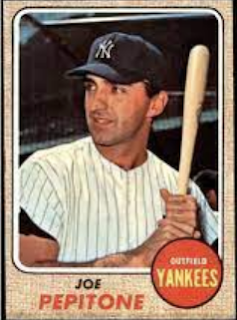
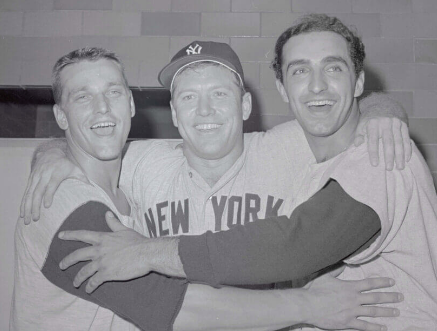
Joe Pepitone has Passed Away Yankees Baseball NY
"It's a sad day in New York, and especially for Italian-American New Yorker's, and those who loved the late great Joe Pepitone, of Brooklyn, New York.
The Yankees are deeply saddened by the passing of former Yankee Joe Pepitone, whose playful and charismatic personality and on-field contributions made him a favorite of generations of Yankees fans even beyond his years with the team in the 1960s,” the Yankees said in a statement.
“As a native New Yorker, he embraced everything about being a Yankee during both his playing career -- which included three All-Star appearances and three Gold Gloves -- and in the decades thereafter. You always knew when Joe walked into a room -- his immense pride in being a Yankee was always on display. He will be missed by our entire organization, and we offer our deepest condolences to his family, friends and all who knew him."
If Joe Pepitone were a car, he’d be a Ferrari — powerful, Italian, and high-performance. Though his career .258 batting average may not evidence power, Pepitone placed in the American League’s top 10 in total bases twice, in RBI twice, and in home runs thrice in his 12-year major-league career (1962-1973). He also clouted seven grand slams.
Defensively, Pepitone showed merit at first base in the junior circuit with a top-10 ranking four times for putouts, four times for assists, and four times for double plays. He also occupied the number-one slot in fielding percentage three times; in addition to first base, he played all three outfield positions.
But it is Pepitone’s off-the-field exploits that often grab more attention. For a Yankee in the 1960s, New York City was a playground of nightclubs, saloons, and crash pads; Pepitone soaked it up like a sponge with teammates, mobsters, and women. There was no If Joe Pepitone were a car, he’d be a Ferrari — powerful, Italian, and high-performance. Though his career .258 batting average may not evidence power, Pepitone placed in the American League’s top 10 in total bases twice, in RBI twice, and in home runs thrice in his 12-year major-league career (1962-1973). He also clouted seven grand slams.
Defensively, Pepitone showed merit at first base in the junior circuit with a top-10 ranking four times for putouts, four times for assists, and four times for double plays. He also occupied the number-one slot in fielding percentage three times; in addition to first base, he played all three outfield positions.
Wednesday, March 8, 2023
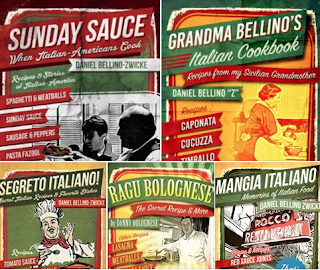
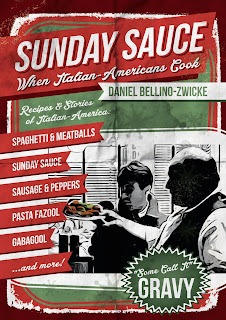
Do You Own SUNDAY SAUCE
Thursday, December 29, 2022
Italian New Year Cotechino Lentils Recipe NY
"TRADITION"
The cotechino is an Italian large pork sausage requiring slow cooking; usually it is simmered at low heat for several hours. Its name comes from cotica (rind), but it may take different names depending on its various locations of production. According to tradition, it is served with lentils on New Year's Eve, because lentils—due to their shape—are 'credited' with bringing money in the coming year.
It is prepared by filling the natural casing with rind, pork meat (usually of secondary preference), and fat mixed with salt and spices; in industrial production, nitrites and nitrates are added as preservatives. Some similar sausages exist in the Italian cooking tradition, for example musetto and zampone which are made with different meat and parts of the pig, musetto being made with meat taken from the pig's muzzle and zampone being held together by the pig's rear leg skin.
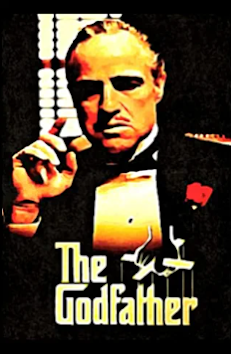
The Godfather Cookbook